PROVINCIAL HEALTHCARE Web APPLICATION
Over a two‑year period, I contributed to the design of a provincial healthcare web application used by residents to access essential health services. The project involved modernizing a complex, policy‑driven digital experience while ensuring alignment with strict accessibility, privacy, and compliance requirements.
My work focused on simplifying multi‑step processes, improving clarity, and creating a more intuitive, accessible experience for a diverse population with varying levels of digital literacy.
All details are fully anonymized due to confidentiality.
Project Scope—
-
I designed clear, accessible digital experiences that simplify complex tasks through intuitive flows, structured content, and thoughtful interaction patterns.
My work focuses on reducing cognitive load and creating interfaces that supported users.
-
I collaborated on usability testing to uncover friction points, validate design decisions, and understand real user behavior.
Insights from testing directly inform iterative improvements, ensuring the final experience is intuitive, accessible, and aligned with user needs.
About the project—
Key Goals
Simplify a complex, policy‑driven healthcare application into clear, intuitive user journeys that support residents with varying levels of digital literacy.
Translate business analysis and policy requirements into structured, navigable service flows that reduce confusion and improve task completion.
Design multi‑step forms and content structures that make dense healthcare information easier to understand and act on.
Ensure accessibility from the outset, applying WCAG‑aligned patterns to create an inclusive experience for all users.
Improve cross‑team alignment by flow diagrams, prototypes, managing Figma design systems and style guideline documentation that supported shared understanding development teams and shareholders.
Validate design decisions through iterative testing, identifying friction points and refining interactions based on real user behavior.
Support long‑term digital transformation by contributing to a consistent design system and reusable patterns that scaled across the provincial application.
A major goal of the project was to modernize paper‑based provincial healthcare forms that previously had to be printed, filled out by hand, and mailed. I redesigned these processes into clear, multi‑step digital forms that users could complete and submit online.
Converted complex, paper‑heavy workflows into structured, guided digital experiences.
Designed multi‑step forms with clear instructions, validation patterns, and error states to support successful completion.
Collaborated with content designers to ensure accuracy, clarity, and consistency across all form steps.
Structured content hierarchies that improved readability and helped users navigate complex requirements.
Created reusable form and content patterns that supported consistency across the entire application.
Forms + Content Structure

Accessibility was a foundational requirement across all design work.
Identified 20+ accessibility issues across content, structure, and UI, partnering with accessibility specialists and developers to ensure WCAG‑aligned remediation.
Conducted accessibility reviews to identify issues in structure, labels, and interactions.
Partnered with developers to ensure accessible implementation of components and UI patterns.
Accessibility (WCAG‑Aligned)
Prototyping & Iteration
Prototyping played a key role in aligning teams and validating design decisions.
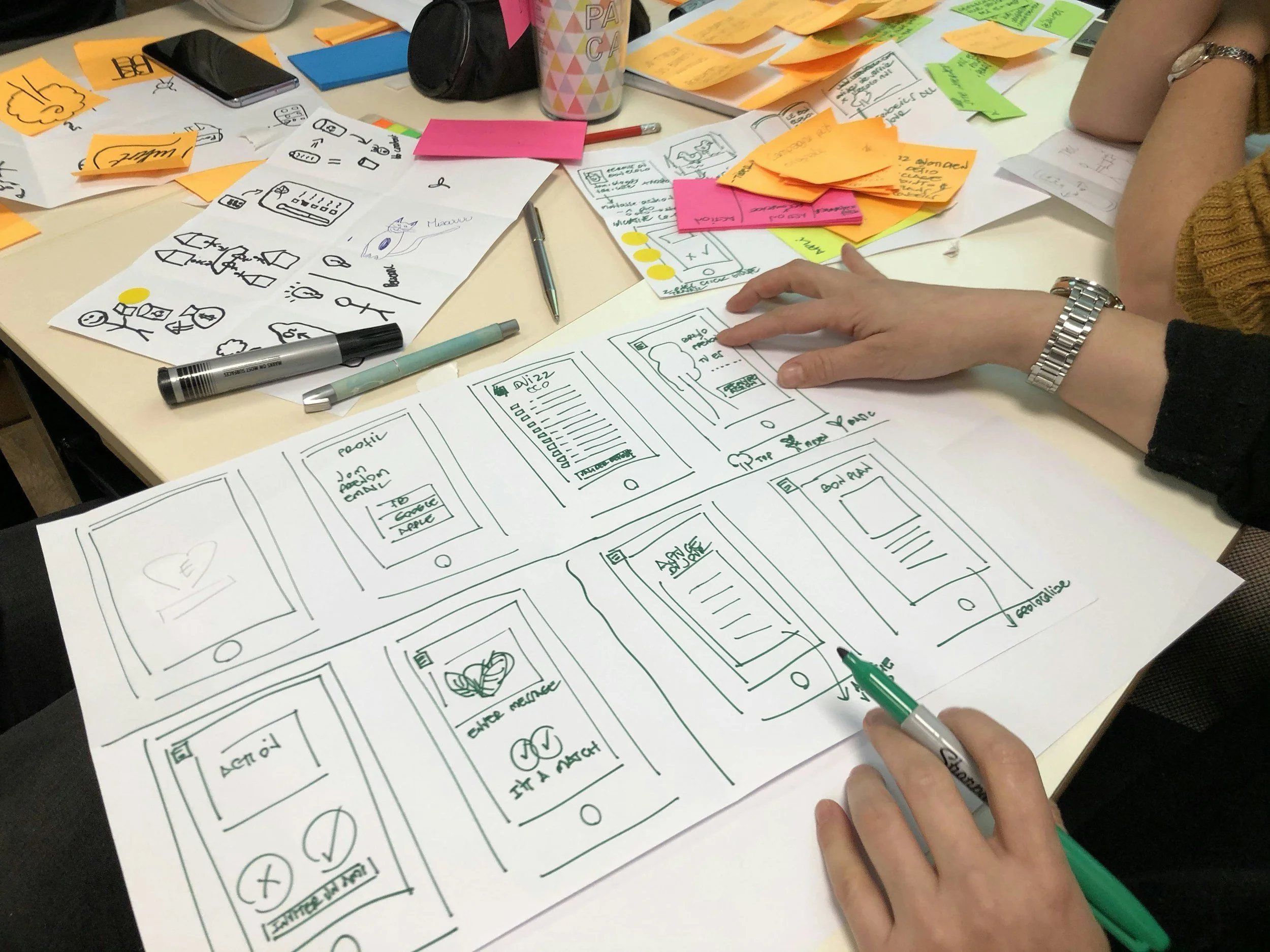
Built wireframes and interactive prototypes to support iterative design reviews.
Refined prototypes based on feedback from developers, testers, and UX teammates.
Used prototyping to validate assumptions and reduce ambiguity before development.
Explored alternative interaction patterns through multiple prototype variations.
Iterated rapidly to meet tight sprint timelines and evolving requirements.

Usability Testing & Analysis
I collaborated with UX teammates to plan and conduct usability testing sessions throughout the project.
Observed user behavior to identify friction points and comprehension challenges.
Synthesized findings into clear, actionable recommendations.
Presented usability insights to client stakeholders to inform next‑phase improvements.
Validated design decisions through iterative testing cycles.
Design System Work
Clear documentation was essential for a project of this scale.
Documented workflows, interaction patterns, and design decisions to support smooth developer handoff.
Maintained and expanded the Figma design system, including component updates and style guidelines.
Ensured consistency across screens and interactions by contributing to shared design standards.
Delivered sprint demos to client stakeholders, communicating design rationale and progress.
Final Outcome
The redesigned workflows, forms, and accessibility improvements contributed to a more intuitive and inclusive provincial healthcare application. The work supported the province’s long‑term digital transformation efforts and provided a clearer, more consistent experience for residents accessing essential health services.