SERVUS
I led the early experience design for ServUs Health, a community‑focused app funded by the University of New Brunswick. Over a three‑month collaboration with the founder, I created user flows, low‑fidelity wireframes, and a product demo that shaped the foundation for future development and user testing.
Project Scope—
-
I shaped the early experience design for the ServUs Health app by translating user needs into clear, intuitive flows that supported both independent users and caregivers.
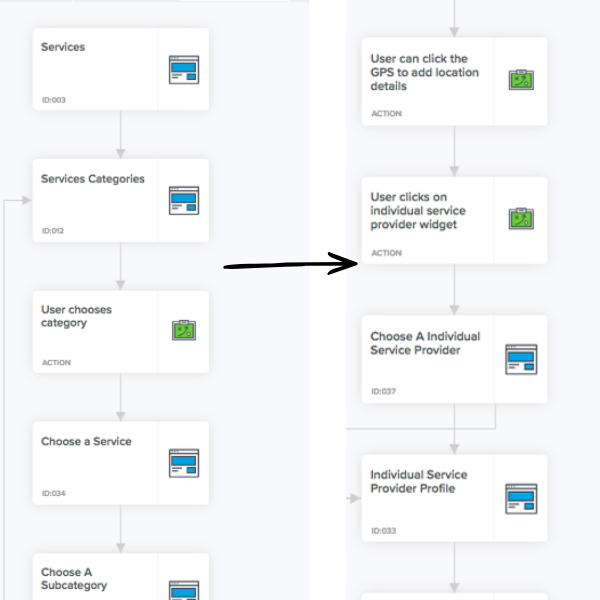
Through conversations with the founder and early user insights, I identified core tasks—finding local services, coordinating care, and tracking activities—and mapped how different user types would move through the app. This work established the foundational structure of the product, ensuring that essential actions like searching for transportation or connecting with service providers were simple, accessible, and aligned with real‑world caregiving scenarios.
-
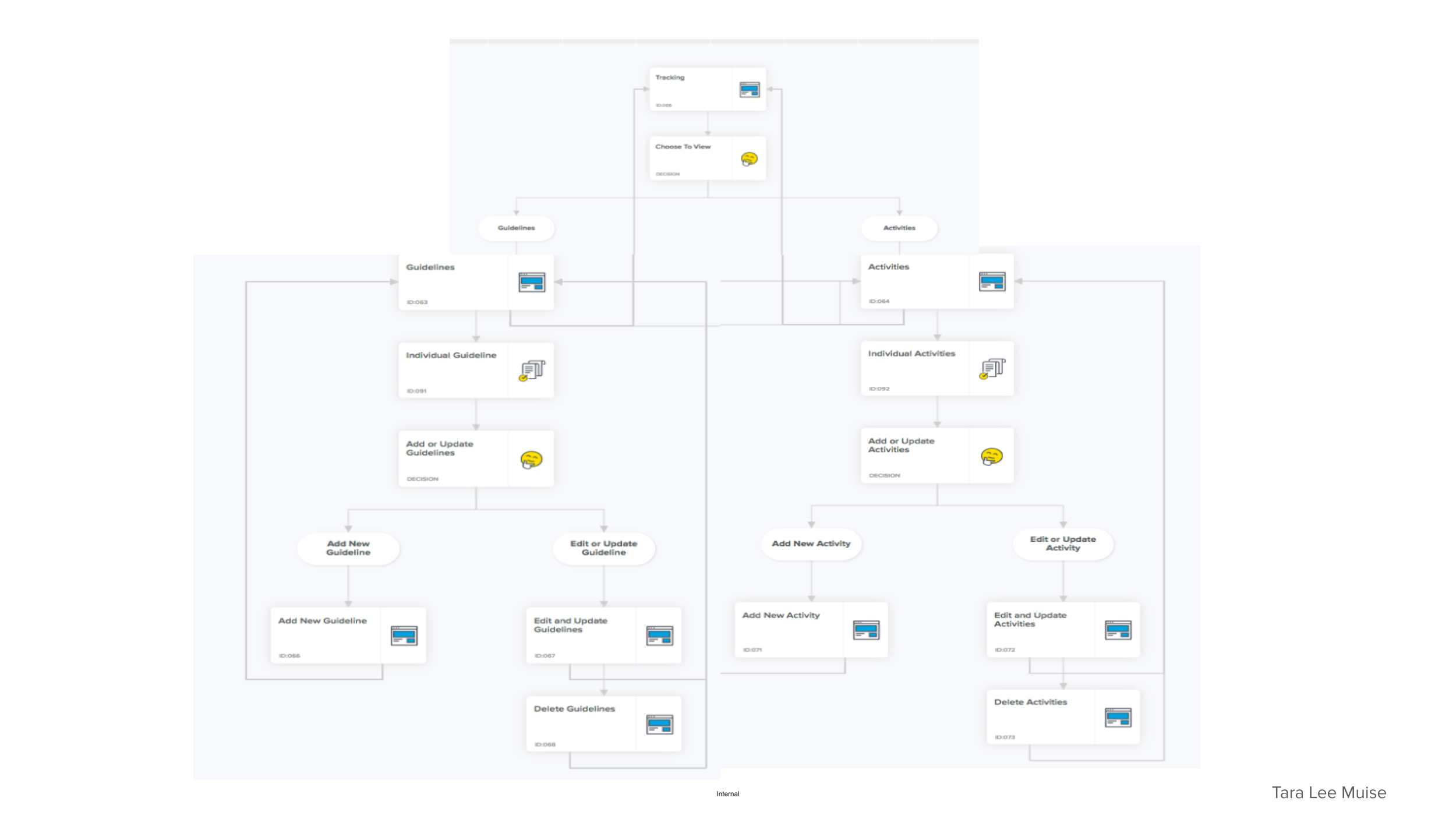
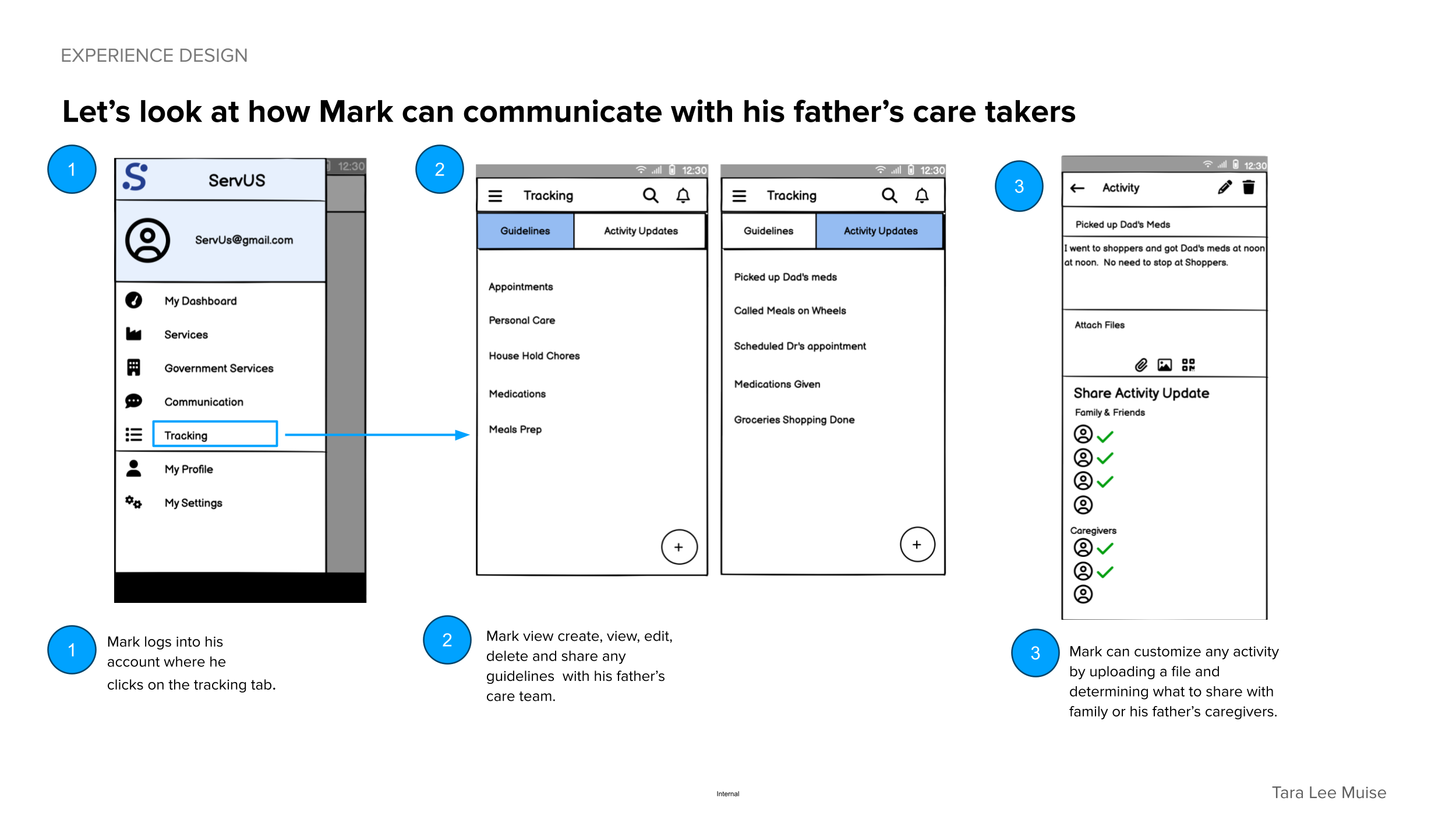
I created low‑fidelity wireframes to visualize the app’s core features and user journeys, focusing on clarity, simplicity, and early validation. These wireframes illustrated how users would search for services, view provider details, and take action within the app.
By keeping the designs intentionally lightweight, I enabled rapid iteration with the founder, reduced ambiguity, and provided a clear blueprint for future development and user testing. The final wireframes served as the foundation for the startup’s next stage of product refinement.

About the project—
Key Goals
ServUs aimed to make it easier for people to connect with local services and coordinate care with service providers. Early user conversations revealed three core needs:
🚗 Access to Local Services — users wanted to quickly find and connect with providers such as transportation.
💬 Communication with Caretakers — users sought reliable ways to stay in touch with their own or loved one’s caregivers.
📋 Activity & Care Tracking — users needed simple tools to monitor activities, follow guidelines, and manage care requirements.
Primary Users
To ground the early experience design, I focused on two core ServUs Health users whose needs represented the broader community.
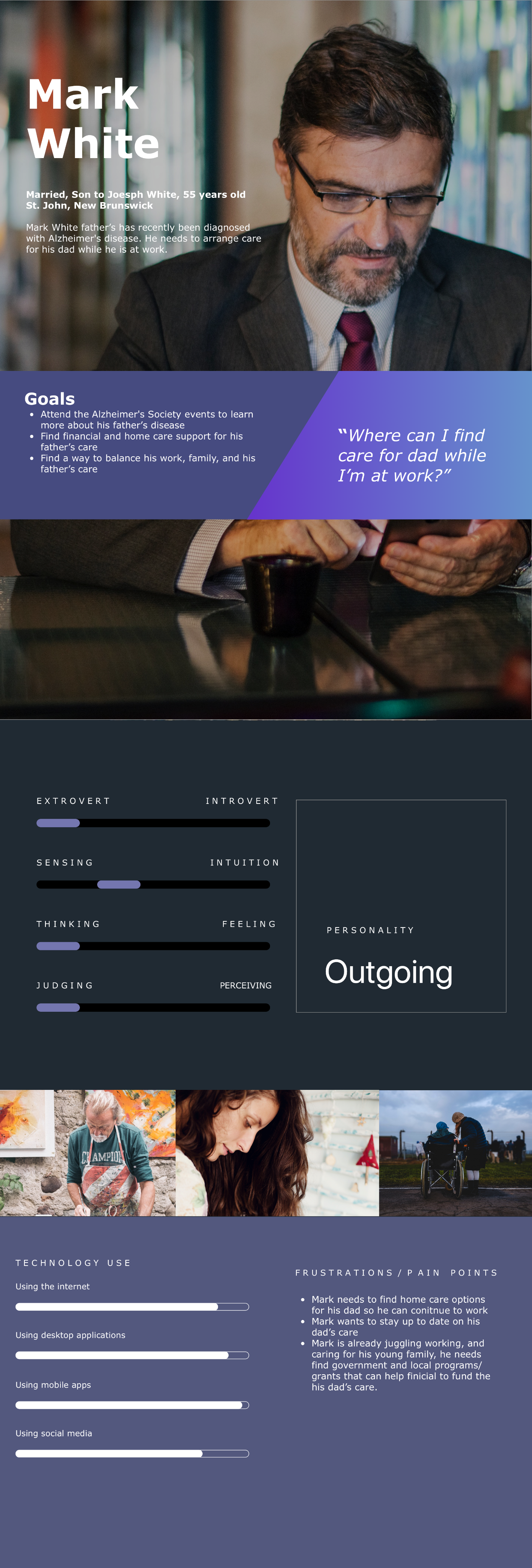
Persona 1: Mark White
“Where can I find care for dad while I’m at work?”
Wants To:
Find home care options for his dad so he can continue to work
Stay up to date on his father’s care by communicating with his dad’s care team
Key Insights:
Mark is already juggling his work and caring for a young family, He knows it is essential that he can communicate and stay up to date with his father’s care.
Mark White wishes to communicate with anyone involved in his father’s day to day care.
User Story: As a user, I want to communicate with view and add members to my care team, so I know who is involved with my care and my loved one’s care.
Entry Point: Click Communication icon on the main menu.
Success Criteria: User is able communicate with an individuals or a chat groups.
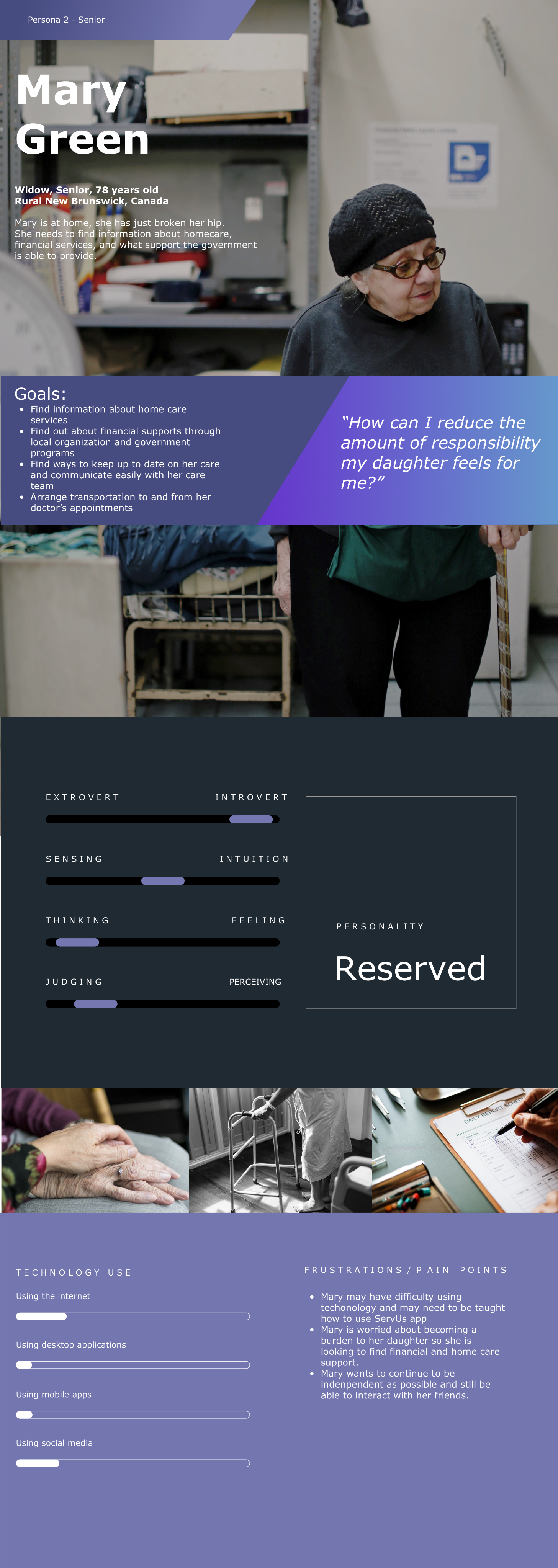
Persona 2: Mary Green
“How can I reduce the amount of responsibility my daughter feels for me?”
Wants To:
Find information about home care services
Find out about financial support through local organizations and government programs
Arrange transportation to and from her doctor’s appointments
Key Insights:
Mary wants to remain independent and lessen the amount of responsibility her children for her care.
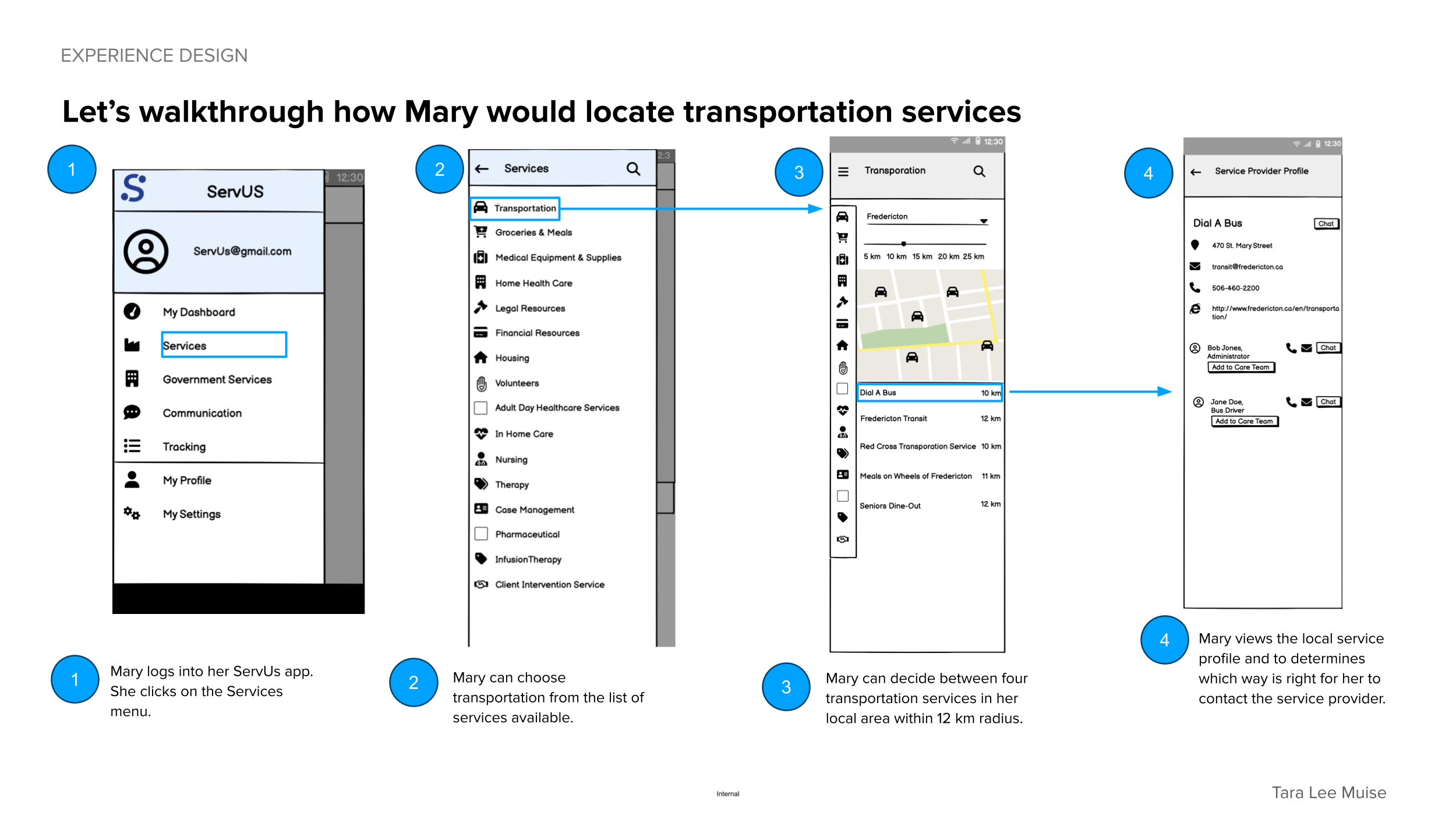
Mary Green wants to find local transportation services to and from her doctor’s appointments
User Story: As a user, I want to search for services and service providers so I can find help and resources to care for myself or my loved one
Entry Point: Click Services menu icon
Success Criteria: Mary can quickly locate a transportation provider and view their available services.

Product Demo Showcases & Community Engagement
Throughout the project, I joined the startup founder at several local health‑care and community events to showcase the early ServUs Health product demo. These events brought together service providers, caregivers, and community organizations across New Brunswick, giving us the opportunity to validate the concept in real conversations with people who would eventually use the app.
Demonstrating the prototype in person helped us gather early feedback, understand real‑world service‑navigation challenges, and strengthen relationships with potential partners. These insights informed the experience design and ensured the product direction aligned with community needs.